I'll never forget the call I received on a random Thursday afternoon:
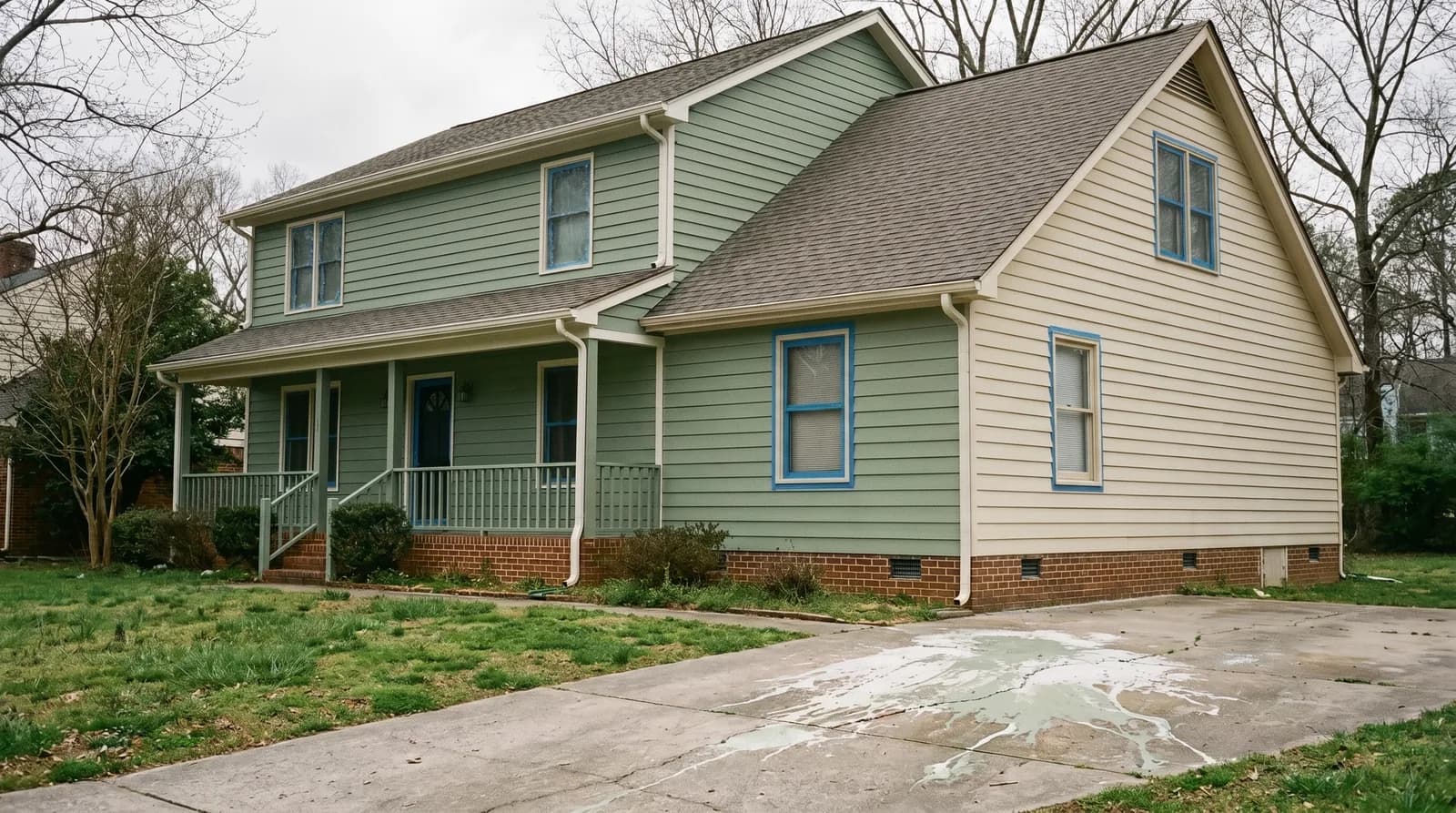
"I know you guys are busy, but we have a big family event this weekend and the crew we hired spilled a 5-gallon bucket of paint on our driveway two days ago and they haven't come back. I've tried calling them multiple times because not only did they spill the paint and make a mess, they also only did about 1/3 of the work with splotches of paint on my roof."
"I'm sorry to hear that sir, and we're normally booked out for a few months, but I just started a new crew up last week so I can probably make it work."
We set up a time, and when I got there for the estimate, let's just say "mess" is an understatement.
The driveway was covered in paint about the size of a car. Paint on the roof shingles. Two sides of the house were done, one side half done, and the back not touched. Tape still hanging off the windows from three days earlier.
So we did what you do and we finished Friday night.
So why do I bring this up?
Because all of this could have been avoided.
When I asked how their interaction with the previous painting company started, he recalled them taking days to respond to booking the estimate, and then being late to that initial quote.
Those two things alone should have been enough to set some alarms off, but they were the only company available before the family event.
So he booked it.
Here's the thing. The company you're hiring is showing you exactly how they'll handle the job, right from the initial call all the way to the agreement.
And that's the part most people miss.
Let me save you the time, money and headache by helping you choose the right painters from the beginning.
1. How they handled you before you sign anything
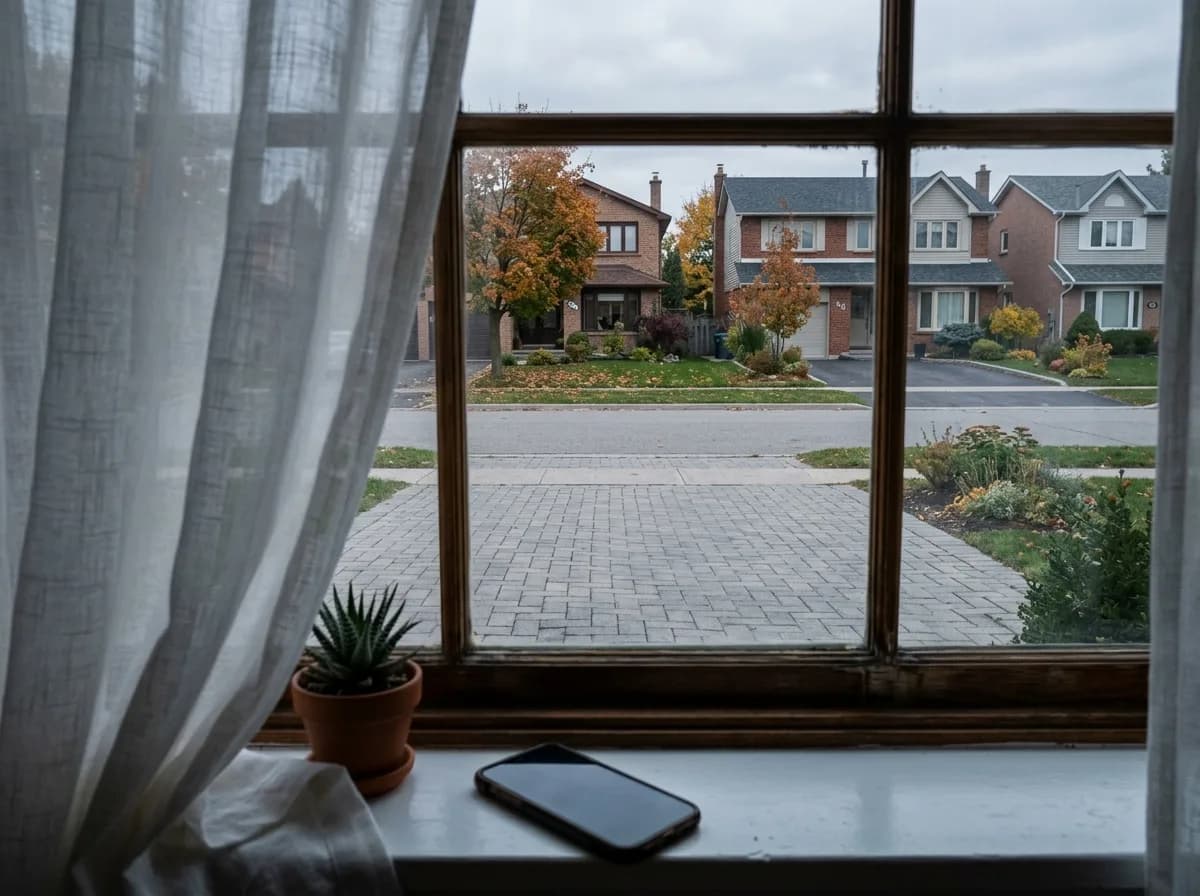
This is the biggest one, and it starts on the first call.
Some companies get back to you the same day. Some take four days. Some never do. So make a judgement based on a few things:
Did this company return my call in a reasonable amount of time? Less than an hour during normal business hours is a good benchmark.
Did they return my call if I called after hours?
Next, let's look at how they handled the call.
Were they asking questions about the job, or were they focused on getting you booked for an estimate without knowing the details of the project?
The company who wants the details is scoping the project, and that's exactly the filter you want.
And if you did schedule an estimate on the phone, did they send you a confirmation with the time and date?
Those details matter, and again, they're a direct reflection of how they're going to handle your project.
Now let's talk about the estimate.
The customary way estimates work is you get a confirmation of that estimate the same day, and if they're going to be late, you should get an update at least an hour before.
The guy who tells you he'll be an hour late five minutes before the estimate time is poor time management.
You won't want that. Promise you.
2. What they did while they were at your house
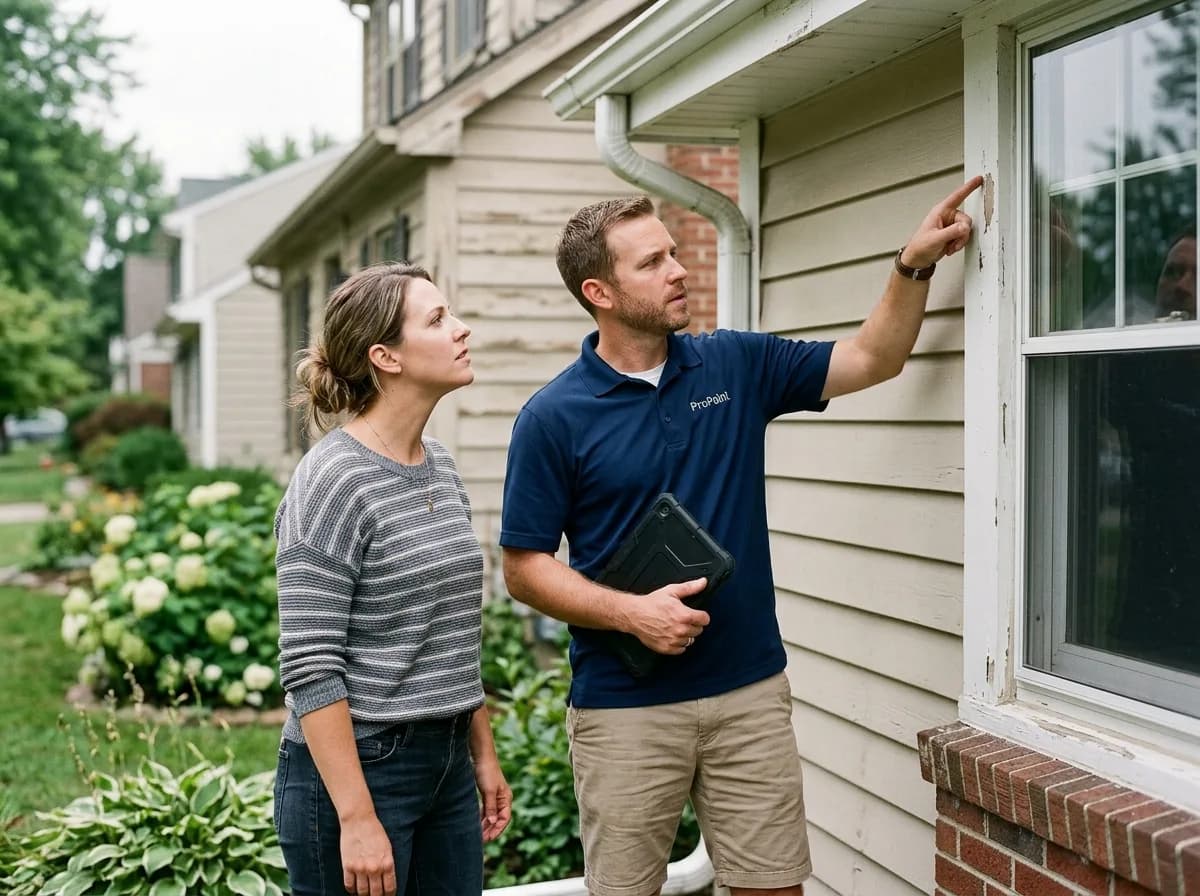
The typical way estimates go is someone comes to your house, walks the property with you, writes up the quote, and goes over the details of the quote with you.
Some companies also do remote estimates, and some of them are really good at it. But they're the exception.
In most cases, when the estimator comes to your house, you want to pay attention to a few key things:
Did the estimator ask questions, listen, and even find things you didn't see?
Were the details and specifics you mentioned on the walkaround noted on the estimate?
Did they write a detailed estimate with line items, or was it just a one lump-sum number?
Those are things you can assess very easily, and they should apply to remote estimates as well.
3. What the quote actually says
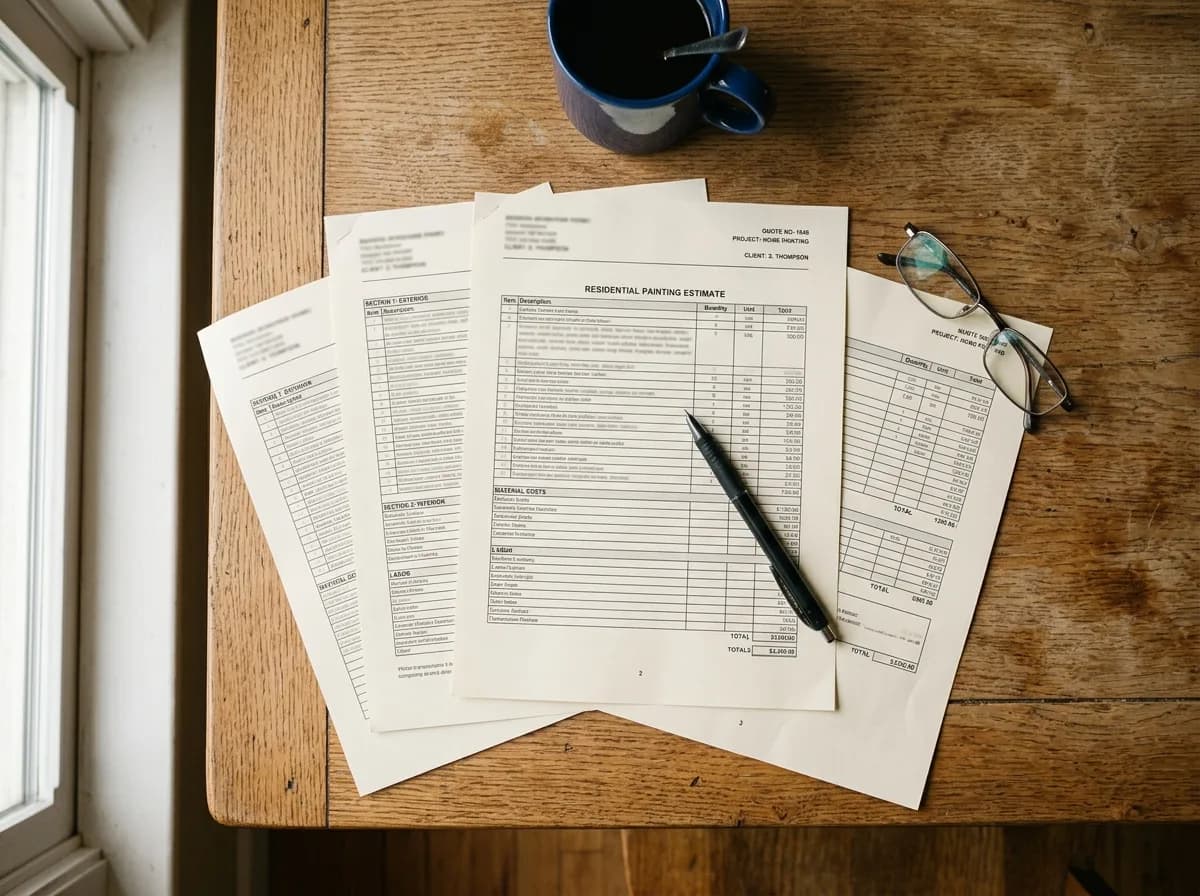
Now that you finally have a quote in front of you, take a second to look for some key things:
- Is it a lump-sum number, or is it detailed with a cost breakdown?
- Does it estimate the amount of gallons needed and the products recommended, and is it specific about coats?
- Is there a projected start date listed?
- Is there a clearly defined payment schedule?
- Is there a legal agreement to sign? This one actually protects you. Look for requirements around insurance, workers comp, payment details, and so on.
- Does it say what's not included?
- Is there a warranty, and what does it actually cover?
That last one is worth its own minute.
Every company does warranties differently. Most land somewhere around 2, 5, or 7 years, and a lot of that comes down to the products they're using. But the number of years is the least useful part.
What you want to know is what's included and what isn't. Some warranties are written as all-inclusive. Some are written with specific definitions of what qualifies. And even all-inclusive doesn't mean everything, because anything that isn't a direct reflection of the work isn't going to be covered. Hail, harsh weather, an act of God, none of that is on them and it shouldn't be.
So read it. The whole thing. If it's dense, run it through an AI tool and ask it what's excluded. Five minutes now beats finding out in year three.
You don't need every one of these to hire someone. But if a quote is missing most of them, understand what that means: everything that isn't written down is going to get decided while the work is happening, and it's going to get decided by them.
4. Call their references
Online reviews are fabricated more often than people want to believe. So don't stop there.
Ask for two or three references from previous customers. Any company doing good work has them and won't hesitate.
Then actually call. It takes ten minutes and here's what to ask:
When was your job completed? You want something recent. A reference from four years ago tells you about a crew that may not exist anymore.
What was the experience like?
Would you recommend them to a friend?
That last question gets you a more honest answer than asking if they were satisfied. People will say they were satisfied. They're a lot more careful about who they'd send a friend to.
Ten minutes of due diligence moves the odds on your whole project.
5. The number
If one quote comes in way under the others, that gap likely isn't cheaper paint.
Materials are a smaller part of a painting bill than people expect. Most of what you're paying for is time. So a number well below everyone else's is fewer hours on your house, and the hours that come out first are the ones you'd never see anyway. The prep. The second coat. The part where somebody comes back and looks at it.
The finished job will look fine either way. For a while.
The paint jobs that last put the proper effort and time into prep before painting, and that drives up the hours.
6. Who's actually doing the work
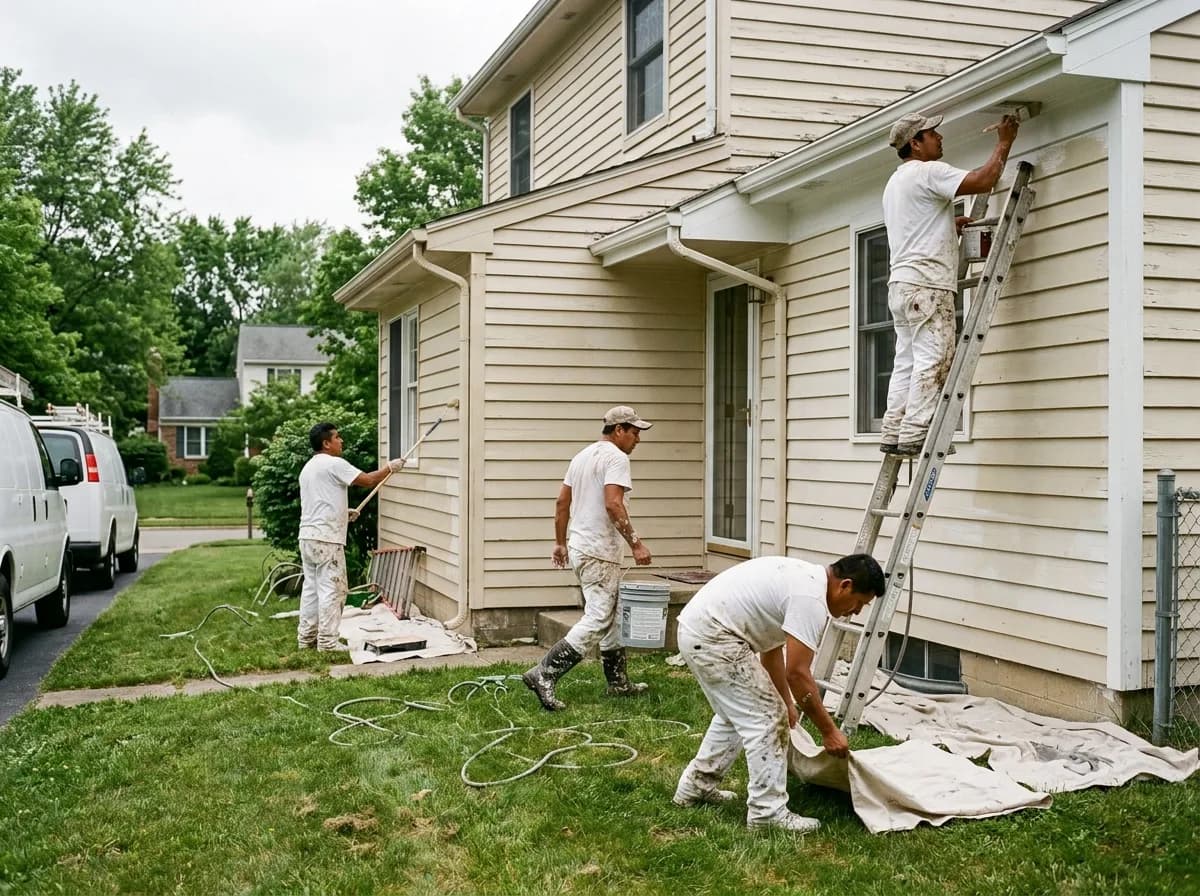
Everything above is about the person who sells you the job. That's usually not the person painting your house.
So ask directly. Who's actually doing the work? Are they employees or subs? How long have they been with you?
And here's the thing: if a contractor uses subcontractors in painting, it's not necessarily a bad thing.
Good painters know they're good and start their own business as subcontractors, so they're often the best crews.
Just make sure to ask: what happens if that crew goes down in the middle of my job?
A company running one crew doesn't have an answer to that. If the guy gets sick or something happens in his family, your house sits half painted until he's back. That can be weeks. A company running several crews just sends another one.
That's the difference between a delay and a job that stops.
None of this is a guarantee. Good salespeople sometimes send bad crews. But you're not trying to be certain. You're trying to make a better call than the guy who booked the only company that could fit him in.
In closing
Hiring the right painting company will make the difference between a stress-free experience and a headache you don't want.
Here's everything worth asking, start to finish. Run through it before you sign anything.
The first call
- Did they get back to me within an hour during business hours?
- Did they return my call if I reached out after hours?
- Did they ask questions about the job, or just try to book the estimate?
- Did they send a confirmation with the time and date?
The estimate
- Did they confirm the appointment the same day?
- If they were running late, did I hear about it at least an hour ahead?
- Did the estimator ask questions and listen?
- Did they find things I hadn't noticed myself?
- Did the specifics I mentioned end up on the estimate?
The quote
- Is it a cost breakdown, or one lump-sum number?
- Does it estimate gallons, name the products, and specify the number of coats?
- Is there a projected start date?
- Is there a clearly defined payment schedule?
- Is there an agreement to sign that covers insurance, workers comp, and payment terms?
- Does it say what isn't included?
- Is there a warranty, and have I read what it excludes?
- If the number is well below the others, do I know what's coming out to get there?
The references
- Can I get two or three previous customers to call?
- When was their job completed, and was it recent?
- What was the experience like?
- Would they recommend this company to a friend?
The crew
- Who's actually doing the work?
- Are they employees or subcontractors?
- How long have they been with you?
- What happens if that crew goes down in the middle of my job?
If you want to connect with some of the best painting companies we know, submit a request here.